A Reading Path Down a Rabbit Hole: Jitish Kallat
Selected conversations, interviews and profiles with and about Indian contemporary installation artist Jitish Kallat
Quotes & images
Resembling archaeological finds or skeletons from beasts from unknown periods. The works pay tribute to the lives lost in vehicles burnt in the communal riots in Bombay and Gujarat in the 1990s and 2000s.
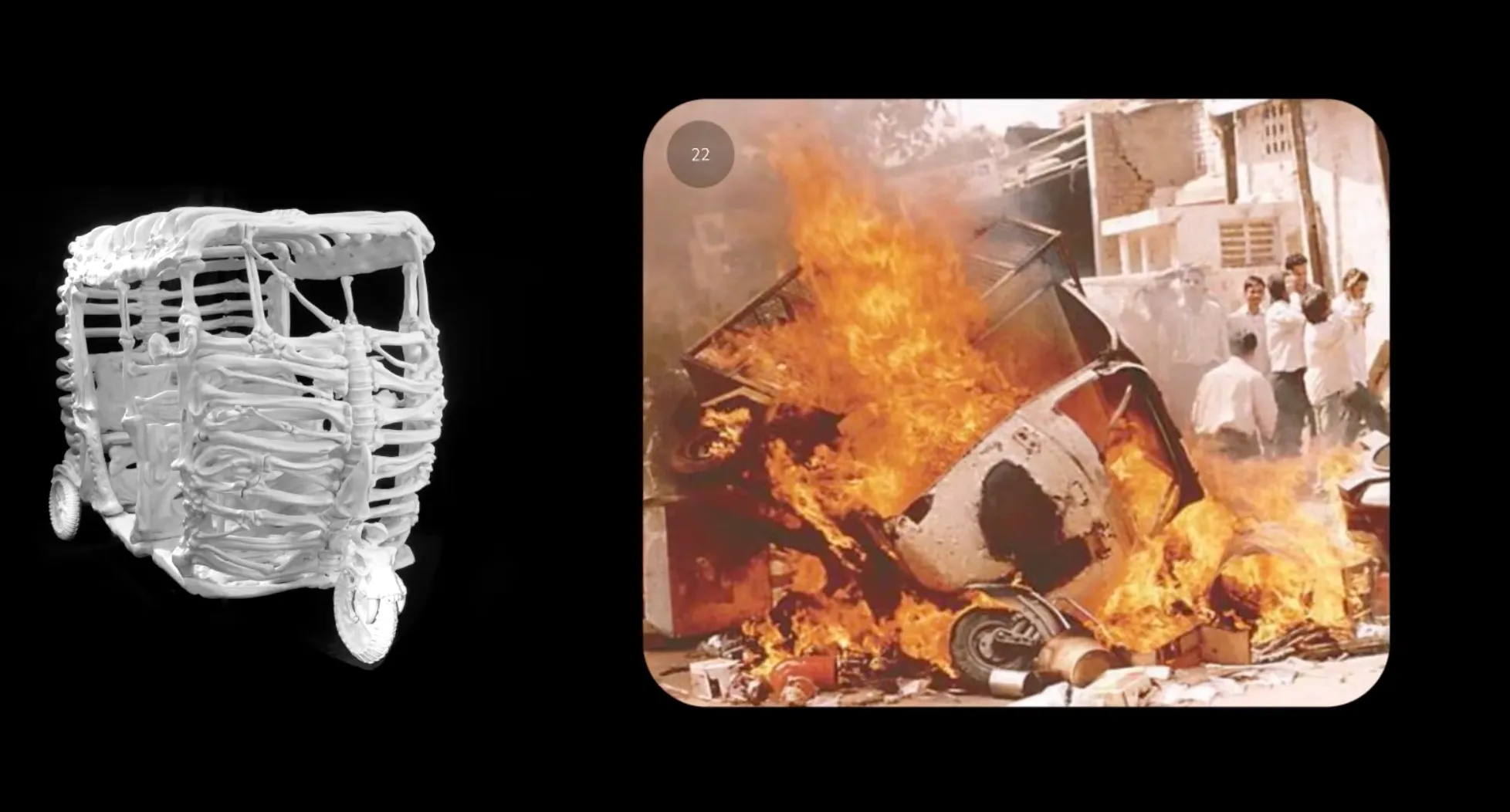
Autosaurus Triopus (2007), resin, paint, steel and brass, 116 × 53 × 66 in. / 295 × 135 × 168 cm — a skeletal auto-rickshaw sculpture modeled on vehicles burnt during communal riots, shown beside a photograph of a torched vehicle from the period that inspired it. Still from “How Artist Jitish Kallat Elevates the Ordinary,” Impart.
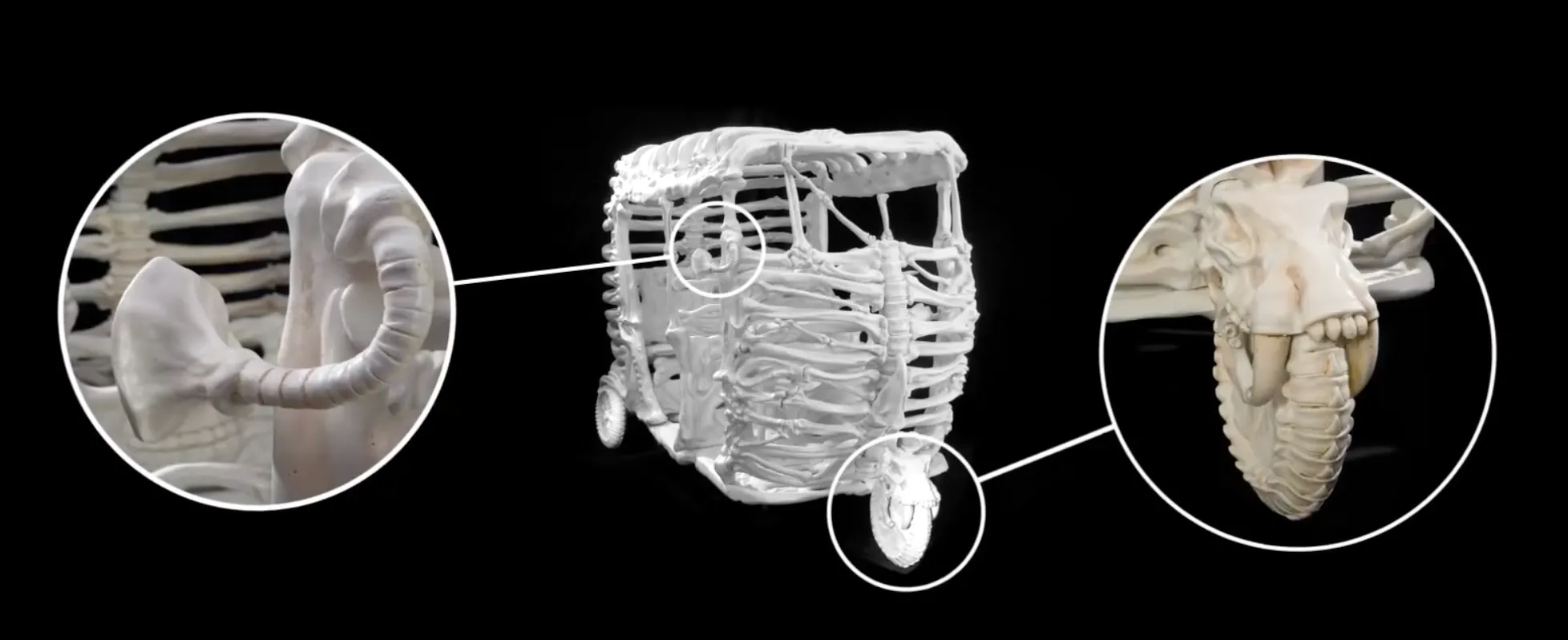
Detail of Autosaurus Triopus (2007). Still from “How Artist Jitish Kallat Elevates the Ordinary,” Impart.
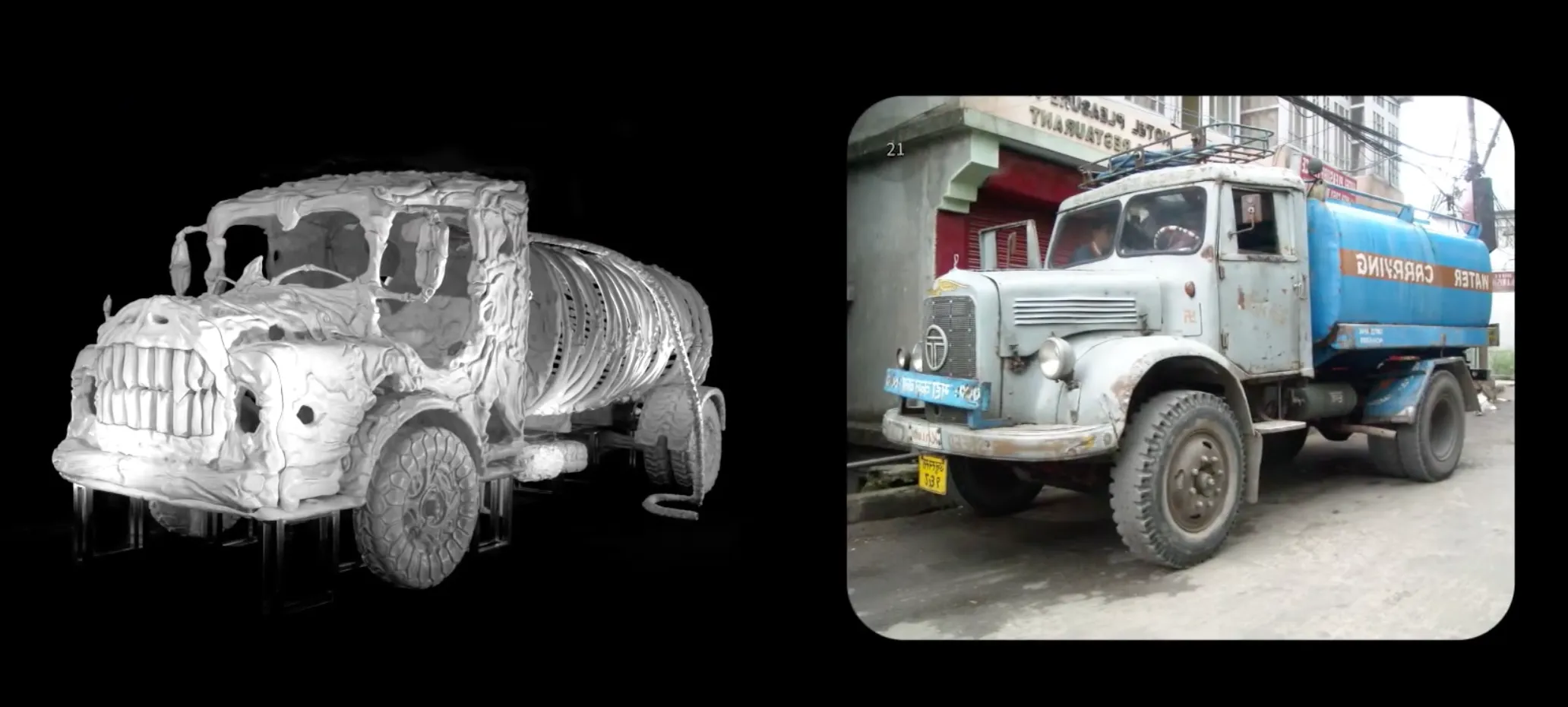
Aquasaurus (2008), resin, paint and steel, 100 × 271 × 106 in. / 254 × 688 × 269 cm — a skeletal water-tanker sculpture, shown beside a reference photograph of a water tanker truck. Still from “How Artist Jitish Kallat Elevates the Ordinary,” Impart.
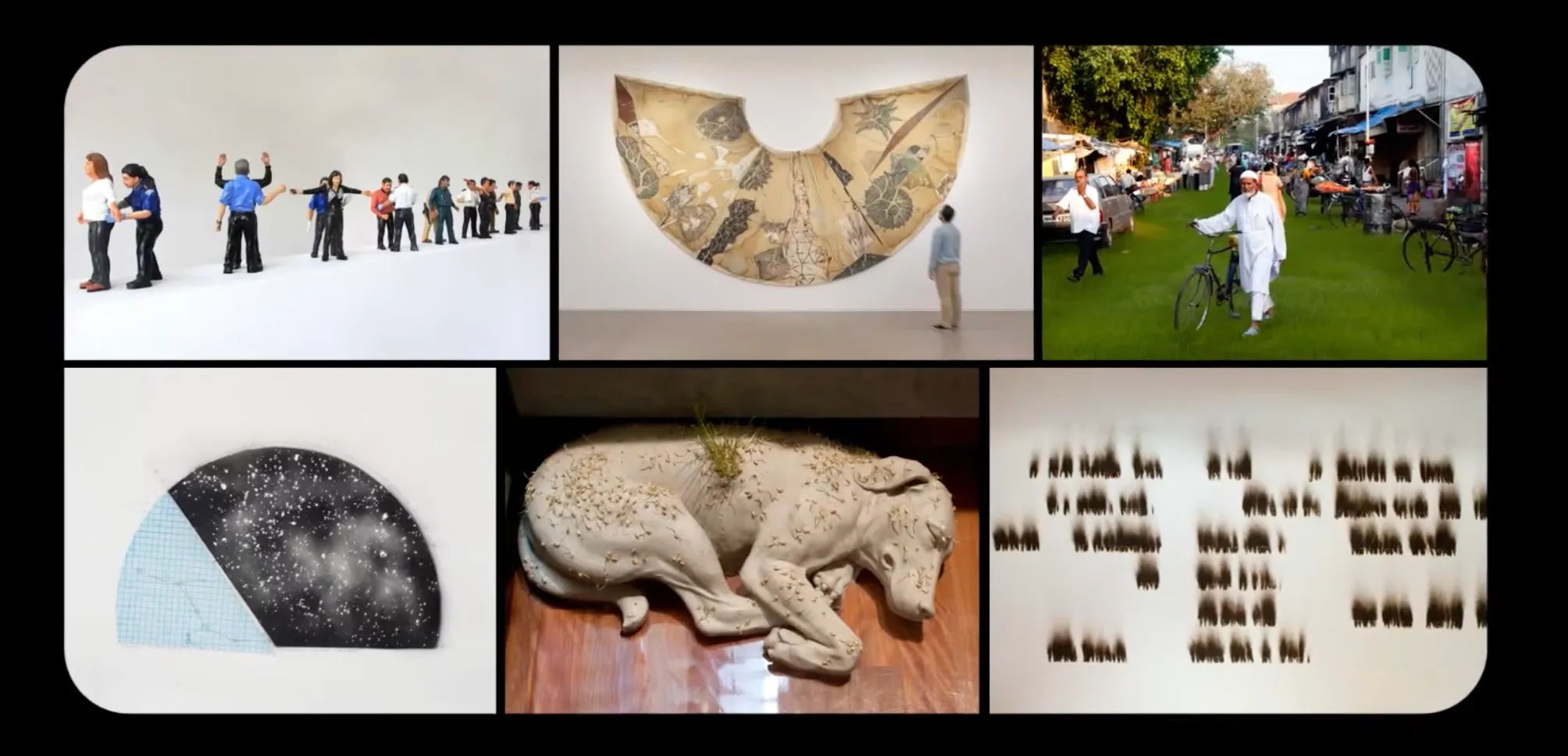
A montage of works spanning Kallat’s practice. Still from “How Artist Jitish Kallat Elevates the Ordinary,” Impart.
For me, geometry is important. I don’t have access to the tools that a career mathematician has, but I do look for what you call “syzygies,” for alignments. Syzygy is a word which is functional both in astronomy and mathematics. You look for alignments: for instance, a date can align and produce a beautiful syzygy of meaning, metaphor, and poetry.
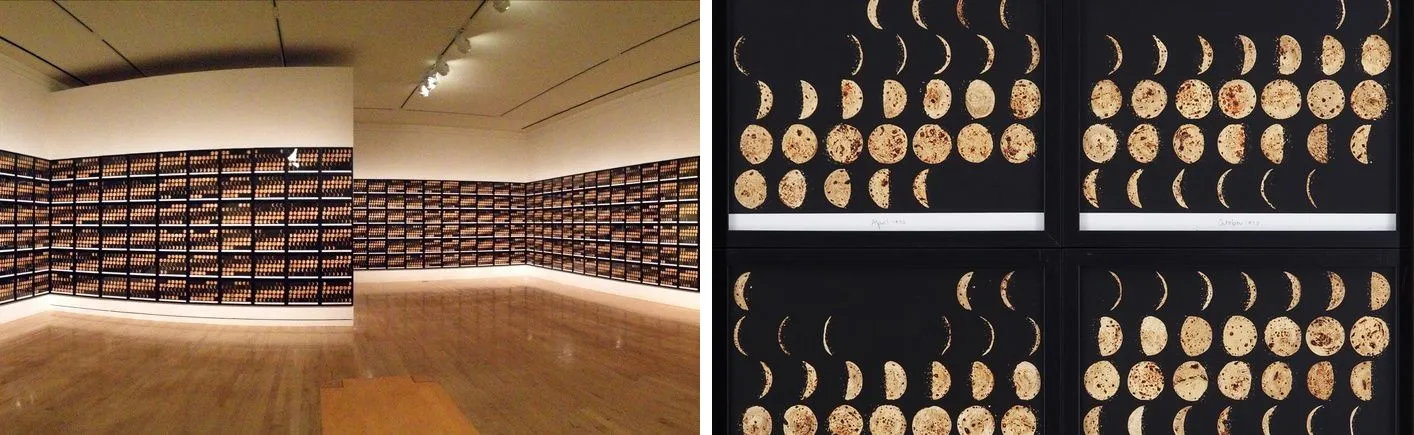
Jitish Kallat, Epilogue, 2010–2011 (detail). Pigment print on archival paper, 753 prints, 11 3/16 x 14 3/8 inches each, display dimensions variable. Courtesy Jitish Kallat Studio.
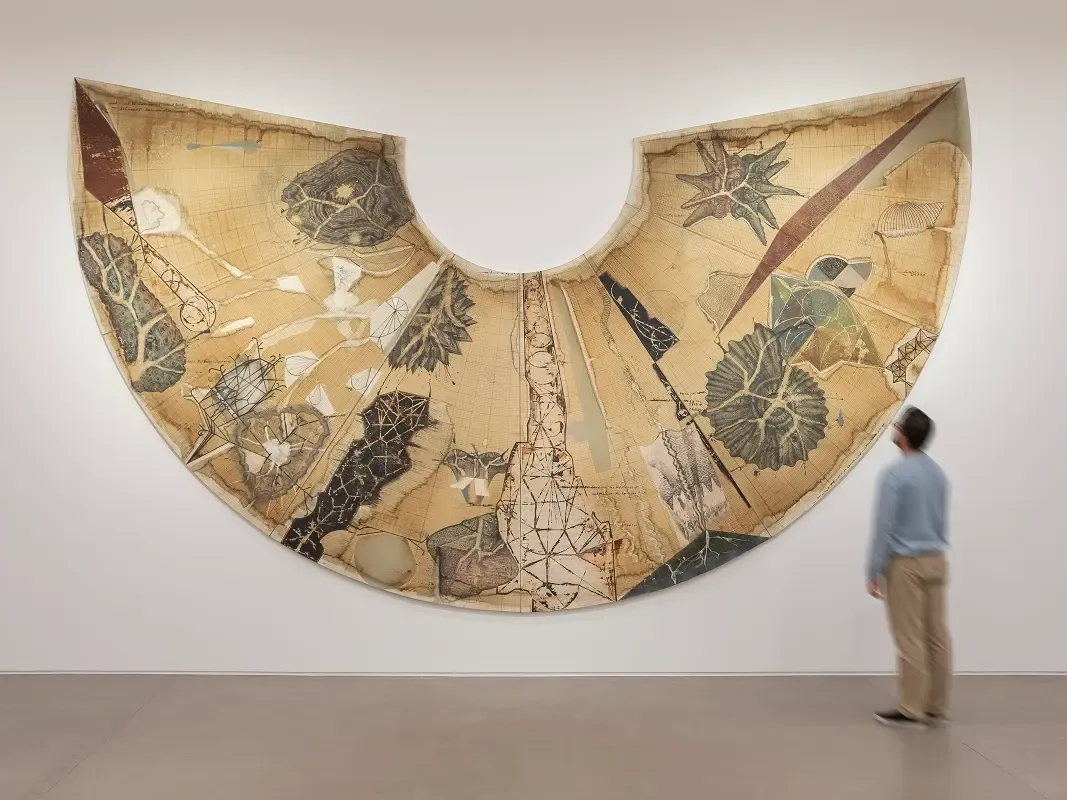
Jitish Kallat, ‘Postulates from a Restless Radius’ (2021). Acrylic, gesso, lacquer, charcoal and watercolour pencil on linen, 640 x 320 cm radius, 375 cm length. Image courtesy of the artist and Ishara Art Foundation. (Photo by Ismail Noor/Seeing Things).
I agree with what you say about the mixing of the jovial with the macabre; I often describe these pieces as ‘grotesque, burlesque and arabesque’ depending on how one sees it. The display of these pieces often resembles a cross between a creature in a Natural History Museum, a brand new vehicle in an auto-expo or an oversized toy in a child’s dream.
For me, this moment, roughly between the 14th and 17th century—which is often called the Age of Discovery—[is a time when] the shores of Kochi was the protagonist. This is when maritime journeys, driven by the magnetism of spices, were reorienting the known geography of the planet. As the maps changed, you also saw sharp turns in history. The fabric of power was being reorganized—the tapestry of power was being rewoven.
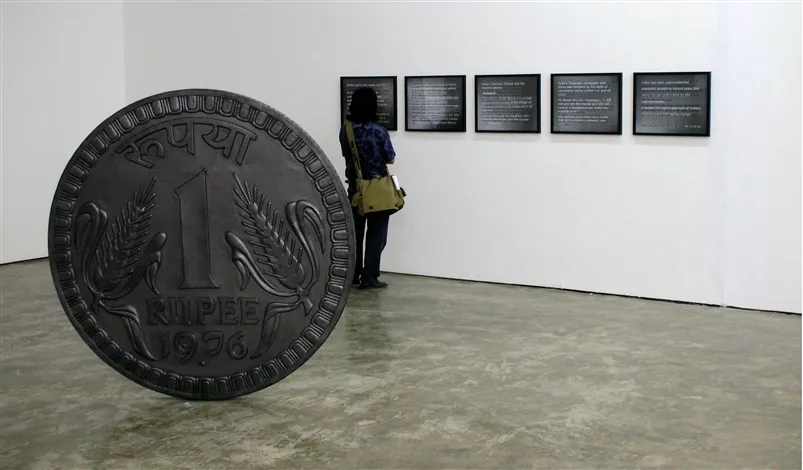
Jitish Kallat, Death of Distance (2007). Black lead, stained resin, steel, lenticular prints. Sculpture: 64 in. / 161 cm diameter; prints: 18 x 23 in. / 46 x 60 cm each.
Covering Letter essentially is a dark room where the illumination itself becomes a part of the correspondence… it is really when the letter rises fully that you realize the author of the letter was Gandhi and the intended recipient was Hitler.
Kuch Hai Features
Wander the region
Profiles and interviews
- How Artist Jitish Kallat Elevates the Ordinary (Impart)
- Artist Talk: Jitish Kallat (The Art Institute of Chicago)
- Jitish Kallat: 'My work mirrors the changing self' (Frontline, January 26, 2023)
- Cosmic Calls by Jitish Kallat: An Artist Talk (Pushkin House)
- Artistic License: Jitish Kallat in Coversation with Sharmistha Ray (Take on Art Magazine, December 16, 2019)
- Jitish Kallat on his practice and works (MCA Australia)
- Interview with Kochi-Muziris Biennale Artistic Director Jitish Kallat (ArtAsiaPacific, January 15, 2015)
- Jitish Kallat - Covering Letter 2012 (extended interview) (MCA Australia)